Exploring Further : The Significant Function of Utility Surveys in Construction
Within the construction sector, grasping what lies below the surface is as crucial as the schemes set forth on the surface. Utility assessments play a crucial role in this endeavor, providing comprehensive data about underground services such as water pipes, power lines, and gas pipes. These investigations help prevent significant complications, ensuring that projects run efficiently and remain on financial limits. As development initiatives continue to grow in scope, the importance of comprehensive utility investigations cannot be ignored.
Ranging from large structural undertakings to compact residential developments, utility surveys are integral to effective design and execution. They allow construction professionals and developers to recognize potential issues and manage the difficulties posed by pre-existing services. In Topographical Surveys Leeds , we will discuss the essential role of utility surveys in development, detailing why they matter, the variances between utility surveys and utility diagrams, and how developing technologies are reshaping this essential aspect of construction preparation. Whether you’re an experienced seasoned builder or only starting in the industry, grasping utility investigations is crucial for completing efficient tasks on time and while avoiding financial excess.
Significance of Utility Surveys
Utility investigations play a crucial role in the preparation and implementation of construction projects. They provide key information about the location, type, and status of underground utilities such as hydraulic systems, gas, power lines, and telecommunications. By locating these utilities before construction commences, project managers can make well-considered decisions, thereby minimizing the risk of accidental strikes and service disruptions, which can lead to considerable delays and increased costs.
Furthermore, utility surveys contribute to improving safety on construction sites. Knowing the precise locations of underground services allows workers to enforce appropriate safety measures, reducing the likelihood of incidents. This proactive approach not only safeguards the health and safety of workers but also minimizes potential liabilities for developers and construction firms. In an field where safety is critical, conducting comprehensive utility surveys is essential.
Additionally, utility surveys support adherence to regulations and facilitate more efficient project approvals. Many local authorities require detailed utility information as part of the licensing process to ensure that construction activities do not interfere with prevailing infrastructure. By integrating utility surveys into the project timeline, builders can simplify the approval process, avoid legal issues, and ultimately lead to more successful project outcomes.
Utility Survey Techniques
Service surveys employ a range of techniques to accurately locate and chart underground utilities. Ground Penetrating Radar is a of the the frequently used techniques. This non-invasive technology uses high frequency radar pulses to locate the presence and depth of utilities below the surface. GPR is especially efficient in identifying the positions of concrete buildings, pipes, and various buried items, making it an invaluable instrument for building tasks. When coupled with additional techniques, GPR can provide a comprehensive view of the subsurface environment.
Another method is electromagnetic location, which operates by sensing the EM fields generated by live services. This method is often used for locating metallic tubes and cables. Service providers frequently use EM detection since it allows for swift identification of active cables, minimizing the risk of unintentional damage during digging. Moreover, when applied together with GPR, it can improve the precision of service location and assist in verifying the existence of various utilities.
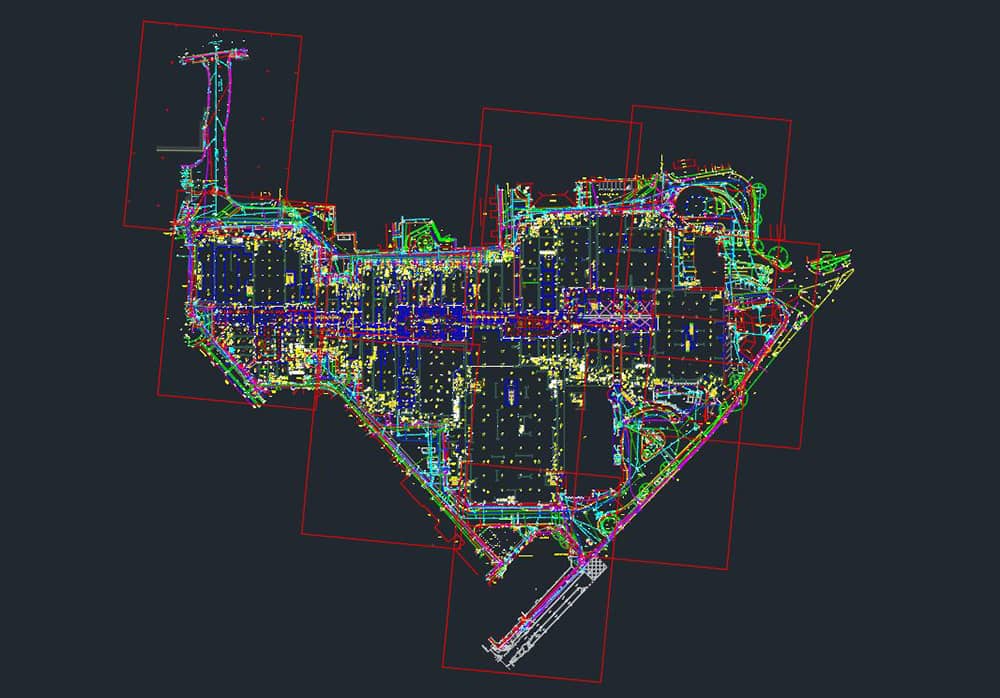
For locations where traditional methods may face challenges, such as in densely congested or cluttered settings, suction excavation has emerged as a valuable method. This method involves using high-powered vacuum to extract dirt around utilities, enabling for immediate visual verification of the service's location. Though this method is costlier and time-consuming than alternative methods, it provides the most precise information into the location and condition of subsurface utilities, which can significantly reduce the risks associated with digging and building tasks.
Issues and Responses in Utility Surveys
Infrastructure surveys face numerous difficulties that can influence their efficacy and reliability. One major problem is the lack of available and accurate utility records, which can lead to incomplete data. Often, utilities may not have current schematics, or prior excavations may have modified existing utilities. This can result in unforeseen difficulties during construction. To address this, building teams should partner with utility companies to acquire the most current information before conducting the survey. Additionally, performing physical inspections and employing advanced technologies can help identify hidden services.
A further significant issue is the varying ground conditions and site reachability. Difficult landscapes, such as those with heavy plant growth or constructed surfaces, can limit the capability of survey tools like ground-penetrating radar. To overcome these challenges, teams may need to alter their method based on the site's specific conditions. This could involve using specialized machinery for difficult environments or timing surveys during ideal weather situations to enhance data collection.
Lastly, ensuring the protection of survey personnel is paramount, especially in urban areas where utilities are densely packed. High risks associated with underground services can lead to hazards such as electrocution or gas leaks. Implementing strict safety measures and training for field teams is essential. Furthermore, adopting non-invasive survey techniques where possible can reduce risks while still delivering valuable insights. By tackling these challenges with efficient solutions, the trustworthiness of utility surveys can be significantly improved, leading to more effective construction projects.